

Exhibition spotlighting the legacy of Marin Getaldić, Croatian mathematician ahead of his time
11 – 26 June 2026
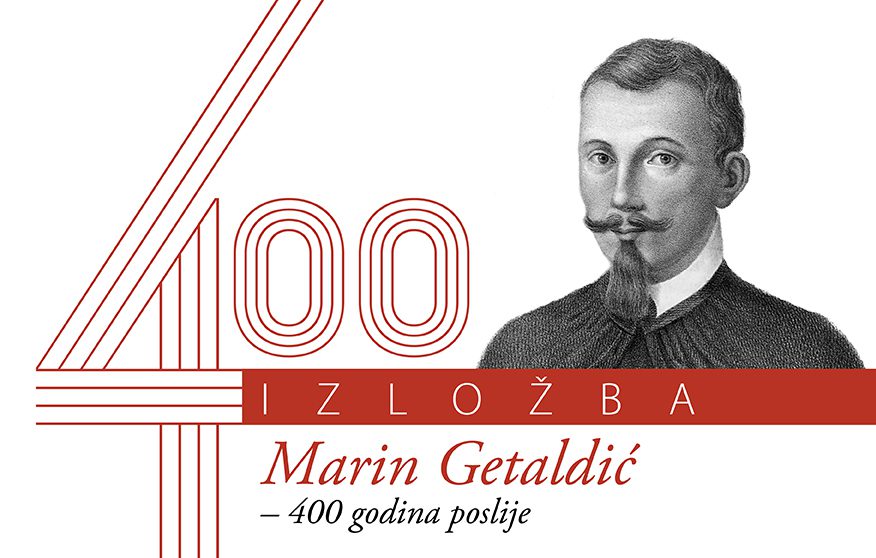
From 11 to 26 June 2026, the National and University Library in Zagreb (NSK) will be showing Marin Getaldić – 400 years later (Marin Getaldić – 400 godina poslije), an exhibition dedicated to Croatia’s greatest mathematician and physicist and the pride of Dubrovnik.
Prepared in consideration of the fact that while Getaldić’s name is widely known among the Croatian public, the exact extent of his contribution to science is still insufficiently recognised, the exhibition will feature the original copies of the great scholar’s works preserved in NSK’s collections.
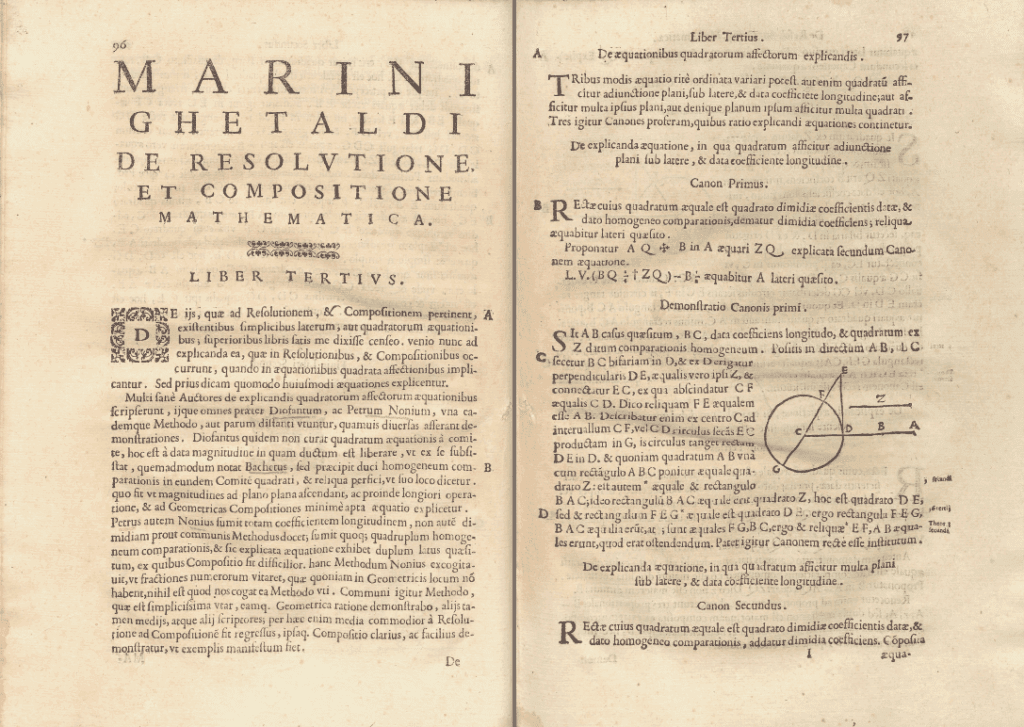
Bringing Getaldić’s life and legacy closer to modern audiences
Authored by a Scientific Adviser at the Croatian Academy of Sciences and Arts (HAZU) Dr Marijana Borić, the exhibition presents Getaldić’s life and intellectual legacy not only to researchers but also to the general public, particularly wishing to reach the younger generations. Along with experts from several fields, artists also took part in the exhibition’s preparation, which synergy has produced a display offering interactive and multimedia content bringing Getaldić closer to the audience in a dynamic and interesting way.
In addition to Getaldić’s works and selected academic and popular resources thematising his life and accomplishments, the exhibition visitors will also be able to see the instruments that he used in his research. As a particularly valuable part of the display, they bear witness to Getaldić’s basing his analyses in physics on conducting experiments and mathematical methods and in this way heralding the modern approach to research in the natural sciences.
The achievements of an outstanding scholar – from a perspective of art
The exhibited items additionally highlight the connection of math and physics which made the methodological core of Getaldić’s research and represented a marked departure from the research methods characteristic of the Renaissance.
The exhibition also brings a unique interpretation of Getaldić’s life and work from a perspective of art, featuring the first busts of Getaldić and other artwork inspired by his biography and achievements, owing to which the world-famous greats of science such as Galileo and Christopher Clavius referred to him in their works.