

Hungarian audience meets Faust Vrančić, “the Croatian Leonardo da Vinci”
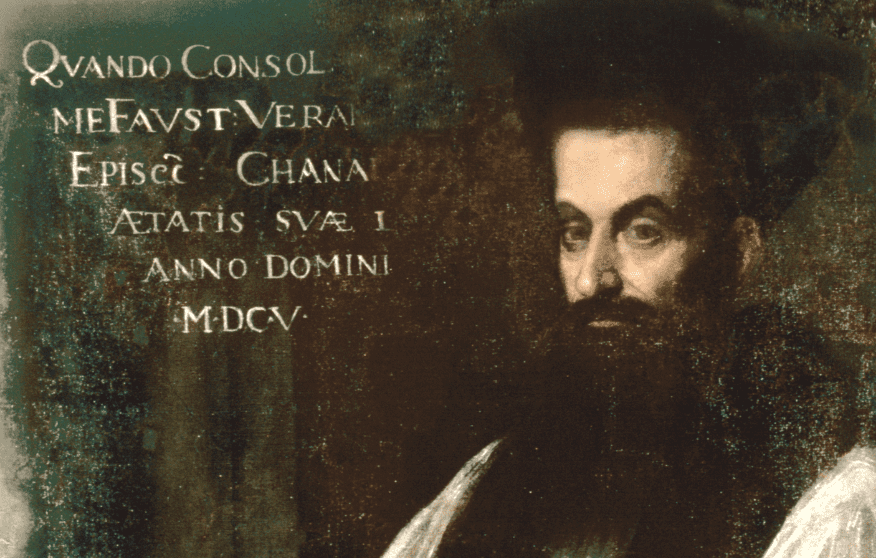
By 26 January 2026, the August Šenoa Croatian community club in Pécs will be hosting Faust Vrančić – the Croatian Leonardo da Vinci, a joint exhibition of the National and University Library in Zagreb (NSK) and the Croatian Academy of Sciences and Arts (HAZU) about a world-famous Croatian humanist, inventor, diplomat and bishop Faust Vrančić (Faustus Verantius).
Marking the 34th anniversary of Croatia’s international recognition, the exhibition has been organised through the club’s cooperation with the Consulate General of the Republic of Croatia in Hungary.
At the exhibition’s opening on 12 January, the visitors heard addresses by the Consul General Drago Horvat and the club’s Director Mišo Šarošac, while the Senior Research Associate at the Division for the History of Natural and Mathematical Sciences at the Academy’s Institute for the History and Philosophy of Science Dr Marijana Borić, the author of the exhibition, presented in greater detail Vrančić’s life and achievements, along with the valuable material from the NSK collections used in the exhibition’s preparation.
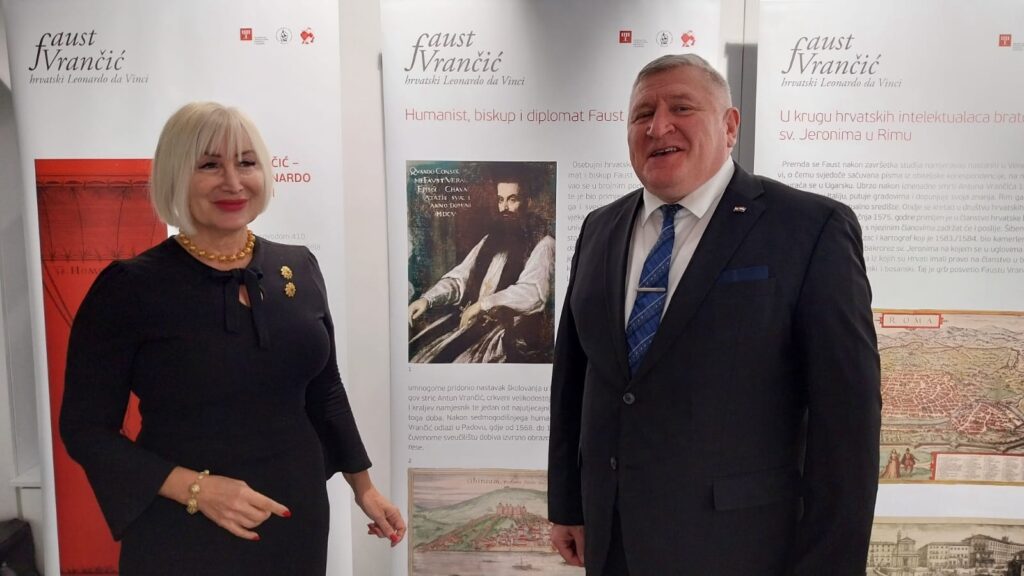

Faust Vrančić, a true homo universalis
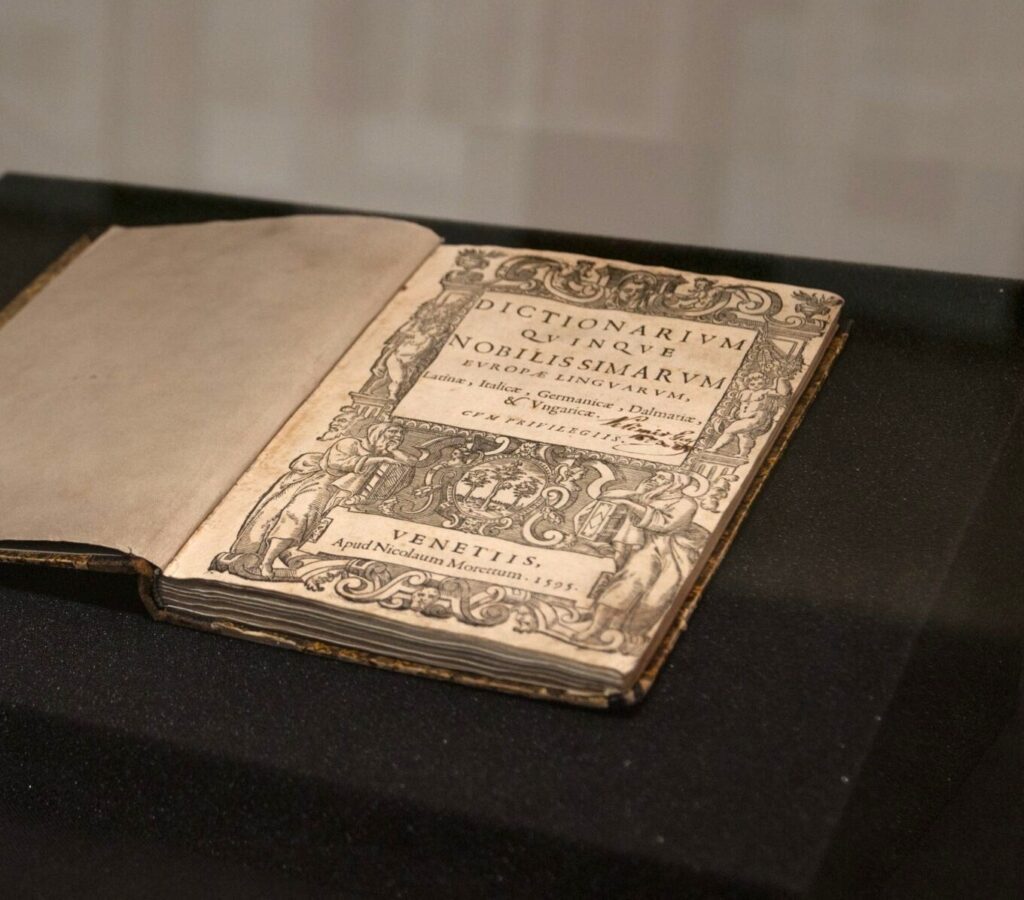
Above all famous for his visionary ideas, Vrančić truly embodied the ability and versatility of “the Renaissance man”. A true homo universalis, he was an inventor, engineer, writer of technical treatises and lexicographer, as well as the author of works in the fields of philosophy, literature and historiography, owing to all of which he has rightfully been dubbed “the Croatian Leonardo da Vinci”.
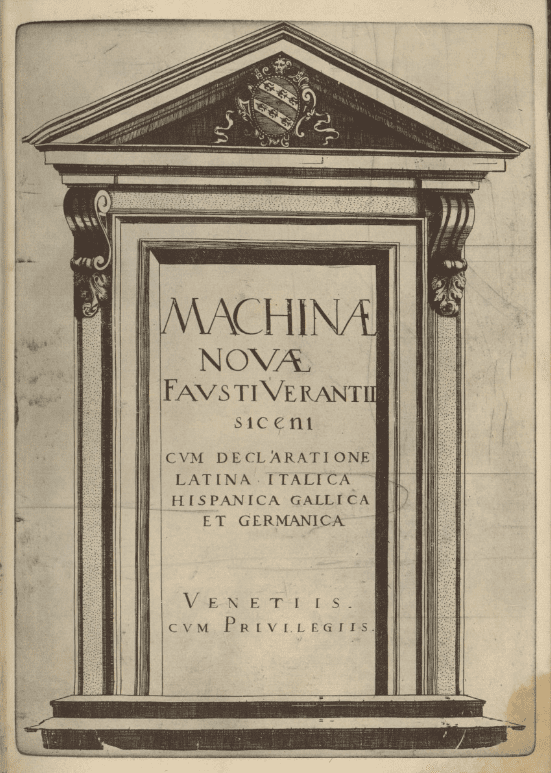
Machinae novae (Venice, 1615/16), a gem of European 17th-century technical literature and Vrančić’s major work, enriched the corpus of technical treatises of the Renaissance period not only by introducing entirely new ideas, but by presenting numerous improvements which perfected the performance and advanced the functionality of the already existing constructions and devices. In this context, Vrančić’s Homo volans, the first published technical description of the parachute in the history of technical literature, particularly stands out.
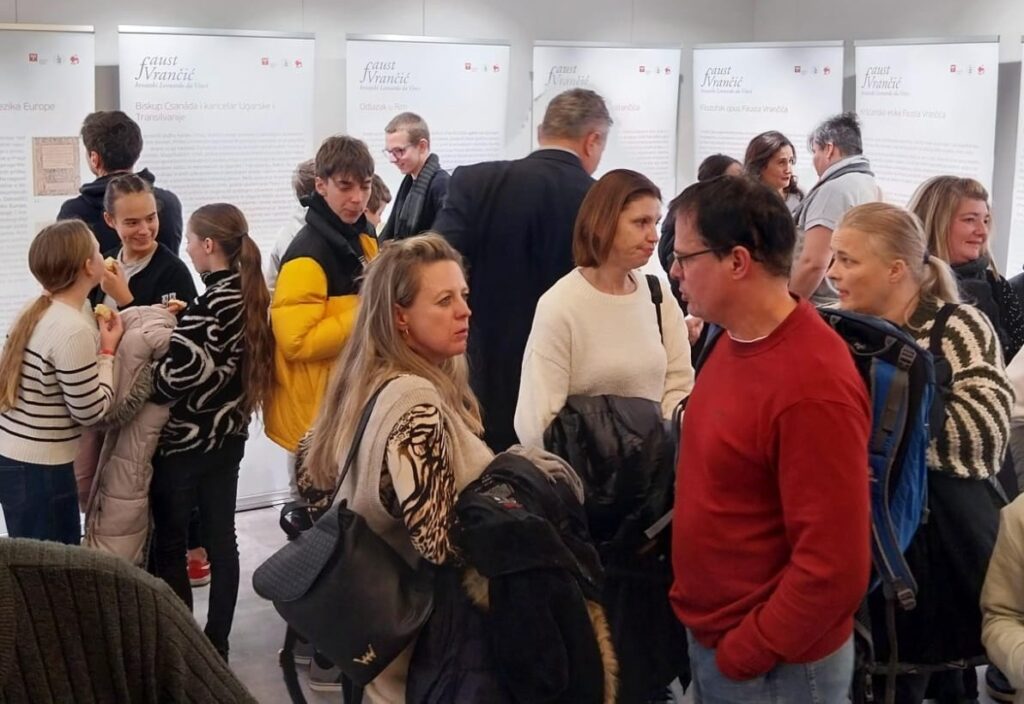
Photo: © Consulate General of the Republic of Croatia in Hungary, Pécs